




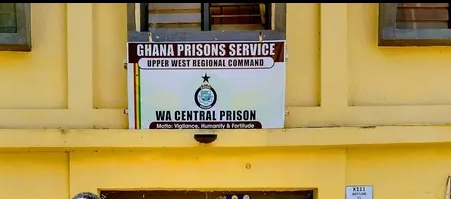
Behind the high walls and iron gates of the Wa Central Prison lies a world few Ghanaians ever see, but one that Deputy Superintendent of Prisons (DSP) Majeed Alhassan knows all too well. As the officer in charge of Criminal Records and Reception, he stands at the painful crossroads where freedom ends and incarceration begins—and the experiences, he says, are emotionally draining beyond words.
“The work of officers of the Ghana Prisons Service is emotionally draining,” DSP Alhassan shared, reflecting on the human suffering he has witnessed in just a few years of service. “Just a few years after joining the service, I have seen a lot.”
Among the most haunting memories are deaths behind bars. DSP Alhassan disclosed that he has personally supervised and facilitated the burial of no fewer than seven inmates who fell sick and died while in custody. “I saw people falling sick, struggling till death,” he recalled quietly.
But death is not the only pain that enters the prison gates. He has watched marriages collapse under the weight of incarceration, with wives finding ways to tell husbands that “the marriage is over,” despite rules that forbid delivering distressing news to inmates. He has also seen inmates lose their sanity entirely. “I have seen inmates who became mentally unstable as a result of the change in environment,” he said.
Perhaps more heartbreaking are the stories of abandonment. An experience shared on Facebook, DSP Alhassan wrote about inmates who served their full sentences without receiving a single visit. “I have seen people who thought they were loved, who served their prison terms without ever receiving a visit—not from family and not from friends,” he noted.
In his role, he has admitted people from every walk of life into custody—teachers, nurses, bankers, security personnel, pastors, mallams, politicians, the rich and the poor, the young and the old. Prison, he said, is the great equaliser. “I personally admitted everyone you can think of into prison custody,” he stated.
He recalled earlier days when some inmates wore a single shirt and trouser for months without a change of clothes, a situation he says has since improved. Still, the shock of imprisonment remains overwhelming. “I have seen grown men cry like children when they are brought in from court for the first time,” he said.
One such moment unfolded just recently and has stayed with him. A 50-year-old man broke down in tears upon arrival at the prison. When DSP Alhassan asked why, the man spoke of his wife and their only child—a seven-year-old girl. “He said he is very close to his wife and child and wondered how they would cope and who would provide for them,” he recounted.
In an attempt to help the man settle psychologically, DSP Alhassan granted him a rare opportunity to make a phone call. Moments later, the wife arrived at the prison—unexpectedly with their daughter. “When I saw the child, I couldn’t control myself. I wept too,” he admitted.
Maintaining professionalism, he gathered himself and spoke gently to the young girl, reassuring her that her father would be released the next day. But the child’s innocent request cut through everyone present. “She asked if she could see her dad, ‘just small’,” DSP Alhassan said, his voice heavy with emotion. Prison rules prohibit visits by children under 18, making the moment one of the most troubling in his career.
Reflecting on the encounter, DSP Alhassan issued a sobering warning to the public. “Whatever you can do to stay away from or avoid imprisonment, please do,” he advised. “The stories of imprisonment you are hearing are underreported. Don’t wish to experience it.”
Source: A1 Radio








 upperwestmedia.net
Leave a Reply