
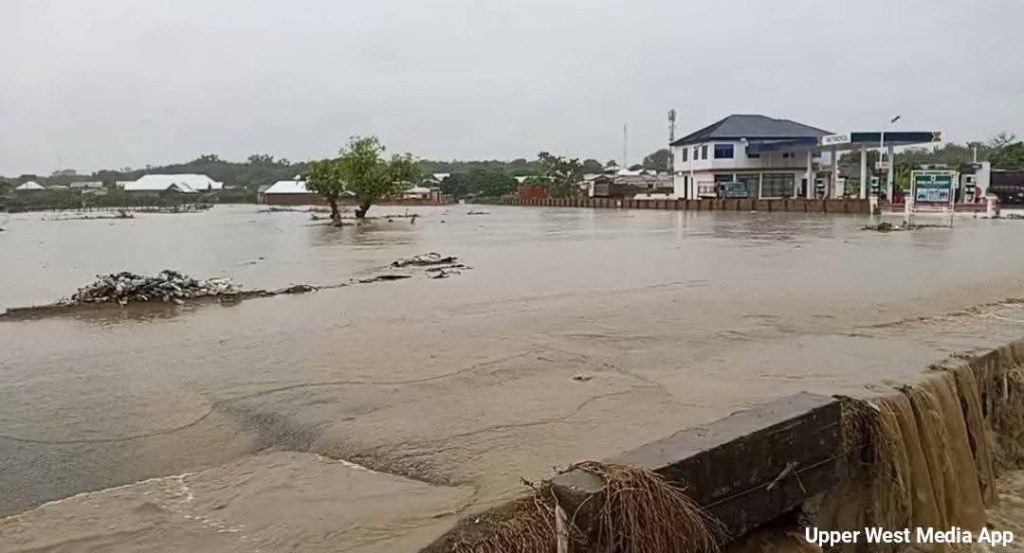


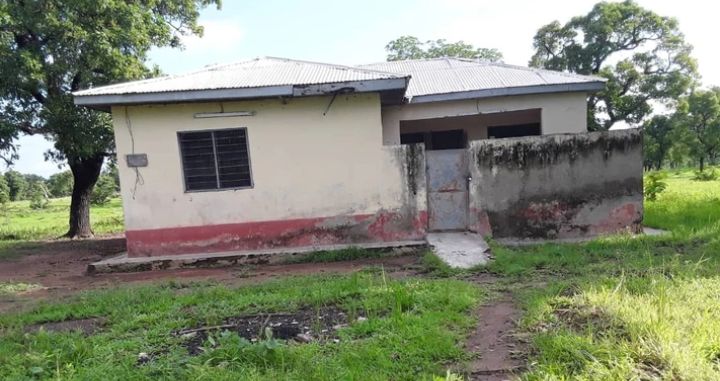

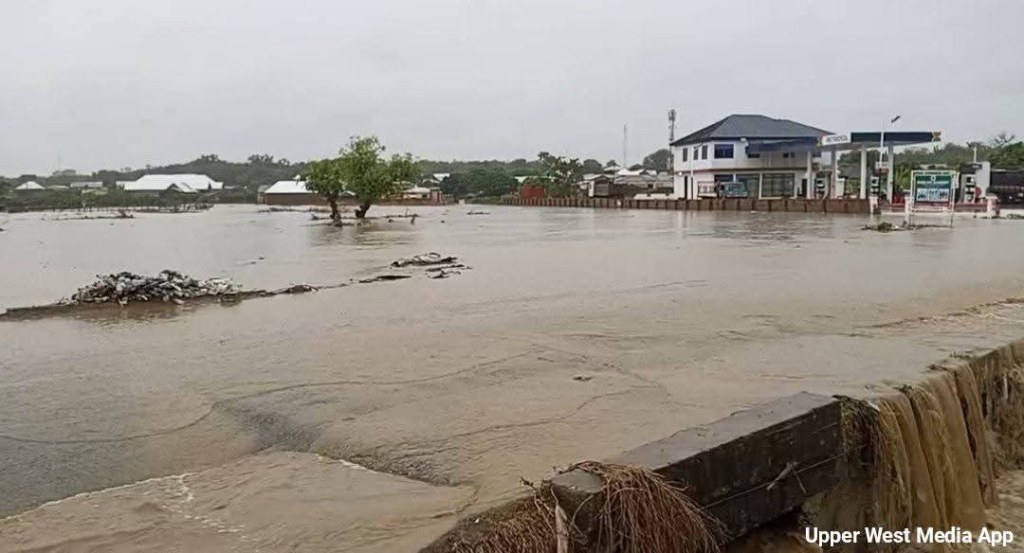
On 29th March 2026, the Wa Municipality experienced a high-intensity pluvial flood event following approximately three and a half hours of torrential rainfall. The precipitation exceeded the hydraulic capacity of existing stormwater infrastructure, resulting in extensive surface runoff, localized ponding, and overbank flow in low-lying areas. The inundation affected residential properties, informal structures, kiosks, and commercial establishments.
Of particular concern was the flooding of two Petrosol fuel service stations—one located at Mangu, a few meters from the Mexixco drinking spot, and the other at Konta near the Lawmass drinking spot. These facilities, sited within hydrologically vulnerable and waterlogged zones, represent a significant environmental and public safety risk. Their exposure during this flood event raises fundamental questions about environmental compliance, spatial planning integrity, and regulatory diligence.
REGULATORY NON-COMPLIANCE AND EIA DEFICITS
Fuel service stations constitute environmentally sensitive undertakings that require rigorous environmental assessment prior to permitting. Under Regulation 12 of the Environmental Protection (Environmental Assessment) Regulations, LI 2504, proponents of such undertakings are mandatorily required to undergo an Environmental Impact Assessment (EIA), supported by a scoping report, baseline studies, and impact prediction models.
A technically sound EIA process would incorporate:
Hydrological and hydraulic modelling (including runoff coefficients, catchment analysis, and flood recurrence intervals),
Flood risk and vulnerability assessments,
Geotechnical and soil permeability studies,
Groundwater contamination risk analysis , and
Land-use compatibility evaluations.
The approval and subsequent development of these fuel stations in flood-prone zones and residential areas indicate clear procedural lapses. Either the EIA process was inadequately conducted, insufficiently reviewed, or fundamentally compromised. In any robust environmental assessment regime, such sites would have been screened out at the preliminary stage due to their inherent flood susceptibility.
EVOLUTION OF THE REGULATOR AND QUESTIONS OF OVERSIGHT
The Environmental Protection Authority, now operating under Act 2025, evolved from the former Environmental Protection Agency established under Act 490 (1994). This institutional transition was intended to strengthen environmental governance, enhance enforcement capacity, and align regulatory practice with contemporary sustainability standards.
However, the Wa flooding incident exposes critical deficiencies in regulatory oversight. The issuance of environmental permits for high-risk installations in ecologically unsuitable locations undermines public confidence and calls into question the effectiveness of compliance monitoring, technical review mechanisms, and post-permitting audits.
Similarly, failures in spatial planning and development control implicate both the Physical Planning Authorities and the Wa Municipal Assembly, whose statutory responsibilities include zoning enforcement, building regulation, and land-use authorization.
A RECURRING NATIONAL FAILURE: LESSONS IGNORED
The events in Wa evoke stark parallels with the June 3, 2015 Accra Flood and Fire Disaster—a catastrophic incident in which floodwaters triggered a fuel station explosion, leading to over 150 fatalities. That tragedy exposed the lethal consequences of poor urban planning and regulatory complacency.
Nearly a decade later, the persistence of similar risk configurations suggests that institutional learning has been inadequate, and that systemic vulnerabilities remain deeply entrenched within Ghana’s urban development framework.
ENVIRONMENTAL AND PUBLIC HEALTH IMPLICATIONS
The flooding of fuel stations presents complex, multi-dimensional risks:
- Hydrocarbon leaching and plume migration into groundwater systems, compromising potable water sources;
- Surface water contamination, affecting downstream ecosystems and human settlements;
- Fire and explosion hazards due to potential tank destabilization or fuel spillage;
- Soil toxicity and long-term land degradation;
- Acute and chronic health risks, including respiratory exposure to volatile organic compounds (VOCs).
These risks underscore the incompatibility of hazardous installations with flood-prone landscapes. UNDERLYING CAUSES OF THE FAILURE
1 . Institutional Weaknesses
The incident reflects systemic institutional inefficiencies characterized by weak enforcement of environmental regulations, fragmented inter-agency coordination, and limited technical rigor in environmental review processes. Regulatory bodies appear to have either overlooked critical risk indicators or failed to apply established environmental screening protocols. The absence of integrated decision-making between environmental regulators, spatial planners, and local authorities has created gaps that allow high-risk developments to proceed unchecked.
2. Attitudinal and Governance Deficits
There is an observable culture of procedural complacency and a tendency to prioritize short-term economic gains over long-term environmental sustainability. Environmental compliance is often treated as a bureaucratic hurdle rather than a scientific and risk-informed process. This mindset diminishes the value of environmental assessments and fosters a permissive environment for substandard practices.
3 . Corruption and Regulatory Capture
The possibility of undue influence by project proponents cannot be discounted. In contexts where permitting processes lack transparency and accountability, there is a heightened risk of regulatory capture—where decisions are shaped more by private interests than by public safety considerations. This undermines the credibility of institutions and erodes the integrity of environmental governance systems.
RECOMMENDATIONS FOR POLICY AND PRACTICE
- STRENGTHEN EIA ENFORCEMENT AND TECHNICAL REVIEW
Environmental assessments must be subjected to rigorous, multidisciplinary review processes, incorporating independent experts in hydrology, environmental engineering, and risk analysis.
2 . REFORM PUBLIC HEARING PROCESSES
Public hearings, a critical component of the EIA framework, must be restructured to ensure they are substantive, participatory, and evidence-based. Currently, these hearings risk being reduced to procedural formalities or instruments for legitimizing predetermined outcomes. To address this:
a . Public hearings should be facilitated by independent moderators, b .Technical documents must be translated into accessible formats for affected communities, c. Stakeholder inputs should be formally documented and demonstrably integrated into decision-making, and d . Regulatory authorities must ensure that hearings are not exploited as transactional tools for project approval, but rather as platforms for genuine environmental scrutiny and social accountability. - INTEGRATE FLOOD RISK ZONING INTO URBAN PLANNING
Comprehensive flood risk maps should be developed and legally enforced to guide infrastructure siting. High-risk zones must be designated as exclusion areas for hazardous facilities.
4. CONDUCT RETROSPECTIVE ENVIRONMENTAL AUDITS
Existing fuel stations, particularly the affected Petrosol facilities, should undergo immediate environmental audits. Where significant risks are identified, decommissioning or relocation should be enforced. - ENHANCE INSTITUTIONAL ACCOUNTABILITY
Regulatory bodies must be subjected to periodic performance audits. Sanctions should be applied in cases of negligence or non-compliance, and transparency mechanisms strengthened. - BUILD CLIMATE-RESILIENT INFRASTRUCTURE SYSTEMS
Urban drainage systems must be upgraded to accommodate extreme rainfall events, incorporating climate projections and sustainable urban drainage solutions (SUDS).
CONCLUSION
The March 29, 2026 flooding in Wa Municipality is not merely a hydrometeorological event—it is a manifestation of systemic governance failure. The siting of fuel stations in flood-prone areas represents a convergence of regulatory lapses, institutional weaknesses, and compromised decision-making processes.
If Ghana is to avert future disasters, environmental governance must transition from procedural compliance to scientific rigor, institutional accountability, and proactive risk management. The lessons are clear; the urgency to act must now match the scale of the risk.
Dr. Moomin Saeed Consultant Environmentalist Founder and CEO of Sawari Research and Resources Consult





 upperwestmedia.net
Leave a Reply