


By Wilson Dabuo
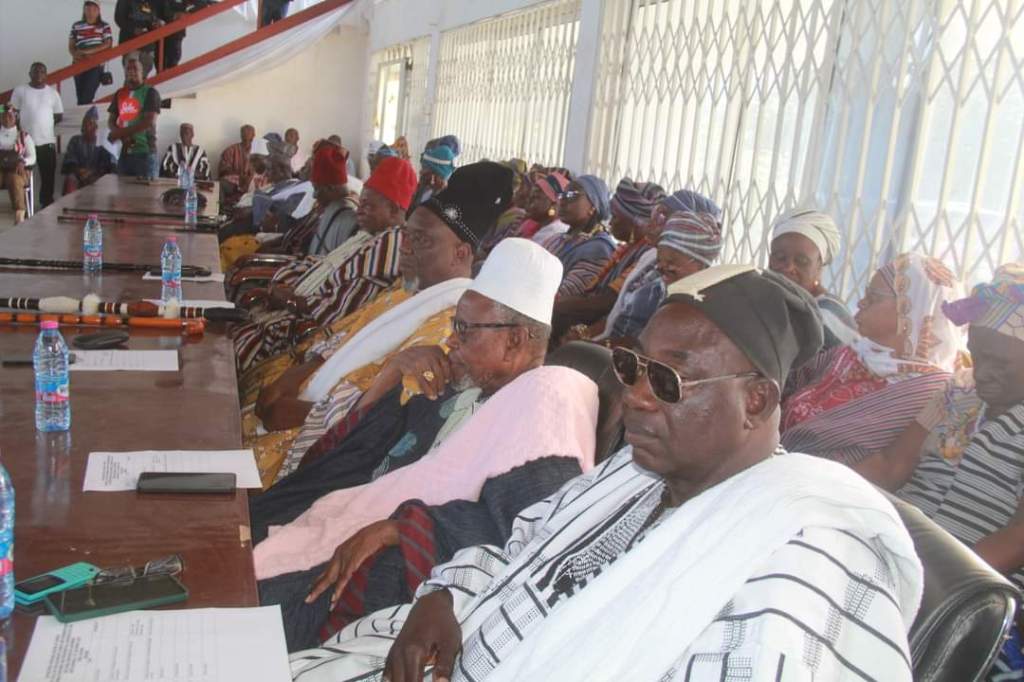
Festivals in Ghana are more than annual spectacles; they are living archives of memory, identity, and community agency. Among the Dagara of Nandom in the Upper West Region, Kakube stands out as a festival whose evolution mirrors the transformations of an entire society, from precolonial agrarian spirituality through missionary encounters to modern statecraft and development planning. Today, as the Nandom Traditional Council led by Vapuo Naa, Naa Francis Kpiere-Nikper I and the Nandomeh Naa of Accra, Naa Joseph Naab II engages national authorities such as the Minister for Tourism and the Ghana Tourism Authority to promote the 2025 Kakube Festival, the event symbolises both cultural resilience and strategic development vision. This feature article examines the historical, religious, cultural, social, economic, political, and developmental significance of the Kakube festival, situating it within broader questions of heritage preservation and community transformation.
Historical Origins: A Festival Interrupted and Revived
Kakube’s roots predate the twentieth century and are tied firmly to the agricultural calendar of the Dagara. Until the 1930s, the people of Nandom celebrated Kakube as a climactic point of the farming cycle as a moment to express gratitude for the harvest, honour ancestor spirits, and renew communal bonds. This continuity was disrupted with the arrival of the first Catholic missionaries. Their insistence on promoting Christmas in late December gradually displaced Kakube in the ritual priorities of new converts. Like many African communities confronted with Christian evangelism, the Dagara experienced a cultural rupture, as indigenous rites were relegated to margins of what was then deemed modern Christian life.
The revival of Kakube came more than half a century later through the vision of Mr. Aricadio Terkemuureh, an erudite cultural scholar and advocate of Dagara heritage. Recognising the loss of a critical cultural institution, he persuaded the Nandom Naa at the time to convene a council of divisional chiefs to deliberate on reinstating the festival. With their approval, Terkemuureh mobilised opinion leaders, formed subcommittees on logistics, finance, hospitality, and transport, and secured contributions from local philanthropists. In November 1989, Kakube was formally relaunched. By the 1990s, the festival had attracted national attention, with state officials invited to celebrate alongside the Nandom community. The festival’s rebirth was thus not a mere return to tradition but a carefully managed cultural reconstruction rooted in collective agency.
Like most Dagara rituals, Kakube is anchored in the cosmological relationship between the living and the ancestors. The festival begins with the brewing of Kakube daa a local alcoholic beverage derived from malt. This drink is indispensable to the ritual life of the festival; without it, no farmer may lawfully sell new grain in the market. The narrative and experiences today is different as citizens blatantly disregard this practice. At dawn of the opening day, elders pour libation using the Kakube daa to petition the ancestors for peace, protection, and future abundance. The ritual underscores two core principles of Dagara religiosity. Thus, Continuity between the living and the dead – ancestors remain guardians whose blessings ensure prosperity; and the sanctity of the harvest – new grain enters economic circulation only after cosmic sanction. Through these rites, Kakube reaffirms traditional ecological ethics that forbid exploitation of the land without spiritual accountability. Again, Kakube is an exhibition of the depth of Dagara cultural artistry. Drumming ensembles, xylophone performances (gyil), hunting dances, and war regalia all reveal layers of history embedded in performance traditions. The festival further provides a platform for cultural transmission:
- Youth participate in initiation-like roles, learning songs, drum languages, and oral histories.
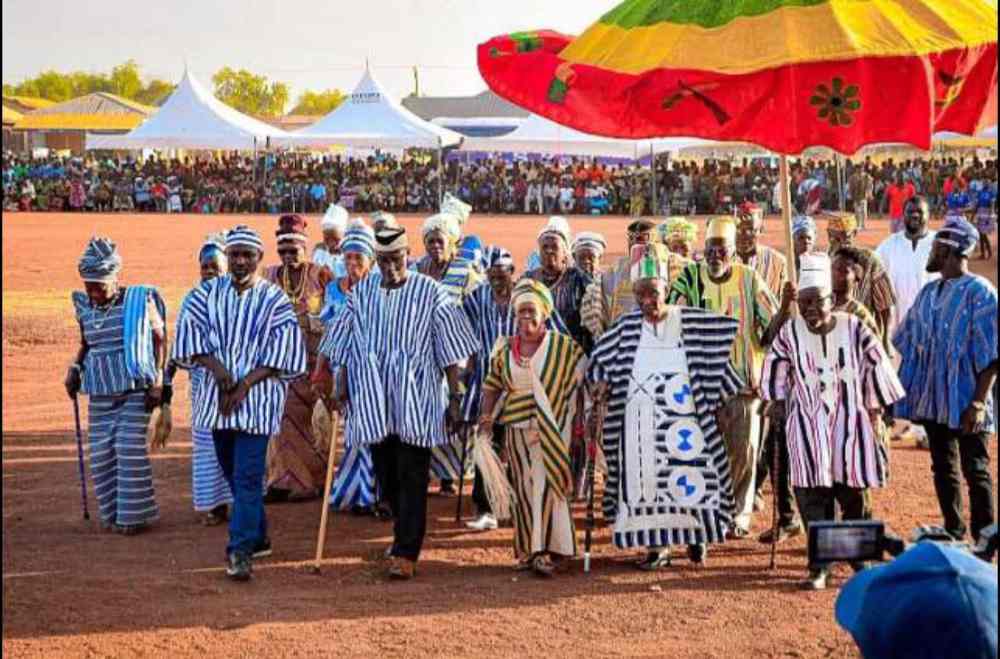
- Families display traditional attire such as batakari (Dagara Kparu) woven with geometric patterns unique to the area.
- Storytellers recount genealogies and migration histories, reaffirming collective identity.
The festival thus serves as a cultural classroom, a learning avenue, ensuring that Dagara heritage is not only preserved but re-enacted with contemporary relevance.
Socially, the festival was and still an occasion to enforce community cohesion and intergenerational Ties. Kakube today, is a major social equaliser. It brings together households scattered by labour migration, education, or urban work. Homecoming rituals strengthen kinship bonds, heal old disputes, and facilitate marriage negotiations. The presence of diasporan Nandom people, especially those from Accra, Kumasi, Tamale, Brong, Burkina Faso, Togo, Cote d’Ivoire, USA, and Europe, turns the festival into a reunion of expansive social networks. Through communal labour, dancing, food sharing, and family ceremonies, Kakube reinforces the Dagara ethic of solidarity. Most importantly, the event in diverse ways serve as a market integration and rural tourism avenue. The economic relevance of Kakube has grown significantly since its national launch. The festival, in its early days stimulated the local economy through:
- Agricultural trade: Once the taboo on selling new grain is lifted, farmers exchange maize, millet, groundnuts, and yam, generating seasonal income.
- Informal markets: Craftsmen and women sell baskets, leather goods, smocks, and herbal products.
- Hospitality and tourism: Guest houses, transport operators, and food vendors experience heightened business.
The ongoing engagement with national tourism institutions, such as the recent courtesy call on the Minister of Tourism and the Deputy CEO of the Ghana Tourism Authority, suggests that Nandom aims to position Kakube as a flagship cultural tourism event in northern Ghana. This aligns with Ghana’s broader agenda of leveraging festivals for regional economic development. It is in the request that the author of this article finds it important to call on all the sons and daughters of the Nandom Tradition Area to rally support for the Traditional Council to make this year’s event a memorable one. Kakube embodies the evolving interface between traditional governance and the modern state. Since the 1990s, the festival has become a forum where local leaders, politicians, technocrats, and civil society actors converge to discuss development needs. The presence of state officials underscores the recognition that cultural institutions can mobilise communities more effectively than bureaucratic mechanisms. The Nandom Traditional Council’s strategic outreach to national authorities reflects the use of cultural diplomacy as a development tool. By inviting ministries and tourism agencies, the chiefs emphasise that heritage can complement national development plans, especially in the spheres of rural infrastructure, creative industries, and youth employment.
It is instructive to reiterate the point that culture is a catalyst for local transformation and thus the need to maintain the sanctity of Kakube. Today, Kakube functions not merely as a festival but as a development platform. Over the years, the festival has stimulated:
- Fundraising for community projects, including schools, clinics, and water systems.
- Advocacy for road improvement, electricity expansions, and digital connectivity.
- Youth empowerment, through cultural education, sports, and entrepreneurship.
- Revitalisation of indigenous knowledge systems, especially environmental conservation practices linked to farming rituals.
By combining culture with development planning, it is the author’s view that the people of Nandom demonstrate that festivals can be engines of transformation rather than mere entertainment. It is in this quest that the festival must not be left to the singular efforts of the Traditional Council but must be a collective collaboration, involving all and sundry. Kakube is our heritage, philosophy, and future. The Kakube Festival of the Dagara of Nandom is a testament to the resilience of indigenous institutions in the face of religious change, colonial encounters, and modernisation. Its revival as at the 1980s, and contemporary relevance reflect the community’s ability to adapt traditions to new social conditions while maintaining core values of spirituality, solidarity, and ecological balance. As preparations intensify for the 2025 Kakube Festival, supported by renewed partnerships between the Nandom Traditional Council and national tourism bodies, Kakube stands poised to reinforce its place on Ghana’s cultural map. It is not only a celebration of harvest but a holistic historical, cultural, economic, and developmental narrative. It is a festival that continues to evolve while anchoring the identity and aspirations of the Dagara people across the world.






 upperwestmedia.net
Leave a reply to vermavkv Cancel reply