




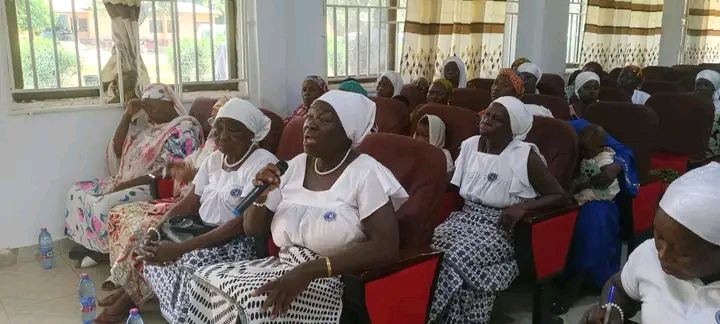
Women in the Sissala East Municipality have called for greater transparency and accountability in the implementation of government support programmes, particularly those targeting women and vulnerable households.
The women made the call during a one-day sensitisation workshop organised by the Sissala East Municipal Office of the National Commission for Civic Education (NCCE), with support from GIZ, on September 30, 2026.
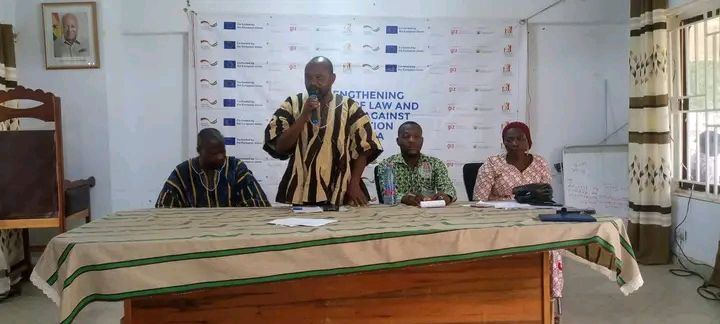
The programme, held at the Sissala East Municipal Assembly Conference Hall, focused on the rule of law and the fight against corruption, understanding corruption, conflict of interest and reporting channels, women’s rights and vulnerabilities, economic empowerment, community integrity and market accountability.
The women raised concerns about the implementation of the Social Cohesion (SOCO) programme, saying seven women’s groups had applied for support to undertake various businesses, but only three groups eventually received assistance.
They said they later received information that funds had been released for all seven groups, raising concerns about the status of the remaining groups and the whereabouts of the funds allegedly allocated to them.
Responding to the concerns, the Municipal Coordinating Director for Sissala East, Mr. Mohammed Zaidu Yakubu, who spoke on behalf of the Municipal Chief Executive, Hon. Adamu Yakubu Bening, said feedback from citizens was essential to ensuring that government programmes were properly implemented.
He said, “We know the Assembly can move far as far as implementing issues are concerned. If we get feedback from you, we make sure that the right things are being done.”
Mr. Yakubu compared citizens’ feedback to guidance from someone observing a person’s journey, saying, “When you are charting a path or following a path, you may not know whether you are straight or not, but somebody behind you can tell you that you are not on course.”
On the SOCO programme, he said the Assembly would investigate the concerns raised by the women.
He explained that seven groups had applied for support, but only four received funding, leaving three groups without support.
Mr. Yakubu said, “For now, I don’t believe that if their money has come, the Assembly would have given it to somebody else. But we will follow up to see exactly what happened.”
He added that the SOCO programme had not received funding for some time and that government was taking steps to revive the programme.
“If it happened that some of you were not served, then we will make sure that you are served,” he assured the women.
The women also questioned the selection criteria under the Livelihood Empowerment Against Poverty (LEAP) programme, particularly the recent enrolment of beneficiaries.
Some participants said they believed they fell within the category of people who qualified for the programme but could not find their names on the beneficiary list.
Responding to the concern, Mr. Yakubu explained that some LEAP beneficiaries were elderly and vulnerable persons who could not easily travel to the Assembly or complete the required processes themselves.
He said, “Some of our beneficiaries, our mothers and fathers, are very weak, and they cannot follow the process. Government support is all about adequate documentation, and our fathers, mothers, grandmothers and grandfathers cannot come and stand in the Assembly to be registered or to collect their money.”
According to him, the programme is household-based, allowing able members of beneficiary households to represent elderly or vulnerable relatives.
“Once it is about the household, and there are able people among them, we allow the able people to represent the household, to represent the old men and women to come and do a collection for them,” he explained.
Mr. Yakubu cautioned community members against assuming that young people seen collecting LEAP benefits were receiving the money for themselves.
He said, “When people see the able people, their young men and ladies standing, they think that they are collecting it for themselves. That is not the case. They are collecting it for their relatives, parents, mothers, grandfathers and grandmothers.”
He stressed that the programme was intended to support vulnerable people who were unable to work.
“We know that government brings policies to support the old men and women who cannot work, so that they can get something small to be happy,” he said.
The women also raised concerns about the National Food Buffer Stock programme, saying some farmers still had maize in storage but did not know where or through whom they could sell their produce.
They said they had heard radio announcements that government had released funds for the procurement of maize but lacked clear information on purchasing points and contacts.
The participants therefore appealed for better communication on the programme to enable farmers with stored produce to benefit.
The women further called for greater inclusion of women in revenue collection at the local market.
They observed that revenue collection was largely dominated by men and appealed for qualified women to be given opportunities to participate in the activity.
The sensitisation workshop provided a platform for citizens to engage public officials on issues affecting government programmes while also educating participants on their civic rights and responsibilities.
The NCCE urged citizens to make use of appropriate reporting channels when they encounter suspected corruption, conflict of interest, abuse of public resources or other forms of misconduct.
The Commission also encouraged participants to promote integrity, transparency and accountability within their communities.
Source: Sissala Radio







Leave a Reply