


A Case for Unity, Fairness, Contribution and Responsible Party Leadership
By Muniru Ibrahim
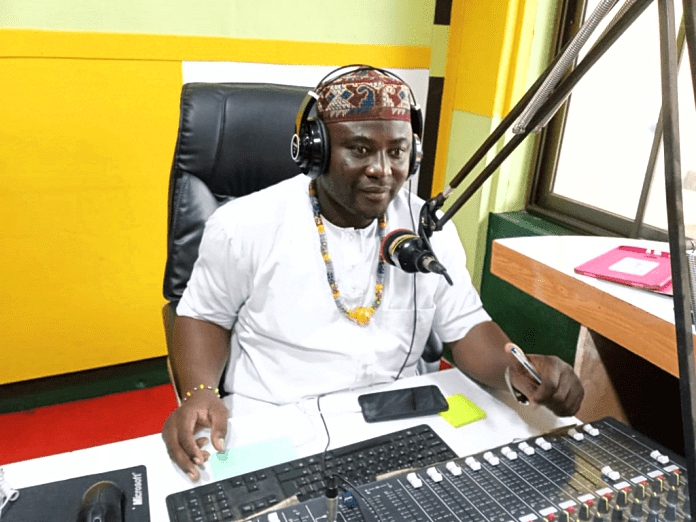
General Manager, Radio Mak 105.5 FM
Development and Management Communication Practitioner
- Introduction: Should Residence Determine Party Loyalty?
Recent calls for NDC delegates to vote only for individuals who reside in Wa or the Upper West Region have generated an important debate about residency, party loyalty, contribution and representation.
While the importance of grassroots participation and local presence cannot be overemphasised, it is equally important to recognise the contributions of party executives who live outside the region, particularly those residing in Accra, but continue to serve the NDC and their home communities.
An individual may reside in Accra and still be an active NDC member, a recognised party executive in the Upper West Region or an executive of the Wa Central Constituency. Such a person may continue to contribute financially, organisationally, strategically and socially to the development of the party and the region.
Therefore, the central question should not simply be where a party executive resides, but also what the individual contributes, how effectively they serve and whether they remain accountable to the people they represent.
This discussion is particularly relevant to the case of Alhaji Alhassan Uthman Gbangu, popularly known as “The Lion,” whose reported contributions to party organisation and community development provide an important basis for examining this issue. - Why NDC Executives Living in Accra Can Be Important to Wa Central and the Upper West Region
2.1. Connecting the Constituency to National Leadership
Accra is the political and administrative capital of Ghana. Party executives who live or work there may have access to national party leaders, government officials, ministers, political appointees and other influential stakeholders.
Such connections can help bring the concerns of Wa Central and the Upper West Region to the attention of national decision-makers. They may also help facilitate discussions about development priorities, employment opportunities and other matters affecting the region.
These networks can complement the work of executives who operate directly at the grassroots.
2.2. Mobilising Financial and Logistical Resources
Party organisation requires resources. Campaigns, meetings, mobilisation exercises and other party activities often depend on financial contributions, transport, communication materials and logistical support.
Executives living in Accra may be better positioned to mobilise resources through their professional, business and social networks.
Their contributions can support constituency activities, strengthen the party’s organisational capacity and assist members who may otherwise struggle to meet certain party obligations.
2.3. Mobilising NDC Supporters Outside the Region
Many people from Wa Central and other parts of the Upper West Region live and work in Accra, Kumasi and other urban centres.
Party executives who live in these cities can help organise such individuals, encourage their participation in political activities and maintain their connection with their home constituencies.
This can help the party build a wider support network beyond its immediate geographical boundaries.
2.4. Contributing to Political Communication and Strategy
Modern politics requires effective communication, strategic planning and the ability to engage different audiences.
Executives based in Accra may contribute to media engagement, political messaging, campaign planning, stakeholder communication and the dissemination of information about the party’s policies and achievements.
Their experience and networks can help the constituency communicate more effectively with national audiences while remaining connected to local concerns.
2.5. Bringing Professional Expertise and Experience
Party executives come from different professional backgrounds, including business, law, finance, public administration, journalism, communication, technology and development practice.
The knowledge and experience they acquire can strengthen constituency organisation, improve administrative systems and support effective political mobilisation.
The party should therefore recognise the value of professional expertise alongside grassroots experience.
2.6. Supporting Development and Community Initiatives
A party executive’s contribution to their home region need not be limited to election campaigns or party meetings.
Through personal resources, professional contacts and social networks, individuals may support educational initiatives, healthcare facilities, youth development, community projects and other activities that benefit the public.
Such contributions can strengthen relationships between the party and the communities it seeks to represent. - Why Their Participation Matters to Wa Central
An executive’s physical location does not automatically determine their level of commitment to the constituency.
A person living in Accra may continue to pay party dues, support branch activities, contribute to campaigns, participate in meetings when possible and mobilise resources for constituency development.
Similarly, living permanently in Wa does not automatically make someone more committed to the party than a person who resides elsewhere.
Commitment must be demonstrated through service, participation, accountability, sacrifice and results.
Nevertheless, local presence remains essential. Executives living in Wa are often better positioned to attend meetings regularly, engage community members directly, respond to emerging concerns and coordinate daily grassroots activities.
The most effective constituency leadership combines strong grassroots presence with the networks, resources and expertise that members outside the region can provide.
Wa Central does not have to choose between local commitment and external connections. It can benefit from both. - Alhaji Alhassan Uthman Gbangu: The Lion Who Supports Wa Central from Accra
The debate becomes more meaningful when considered alongside the reported contributions of individuals who continue to support their home communities while living or working outside the region.
Alhaji Alhassan Uthman Gbangu, popularly known as “The Lion,” has been associated in published media reports with contributions to NDC party organisation, education, healthcare, journalism and community welfare.
The following examples illustrate the range of contributions attributed to him in those reports.
4.1. GH¢40,000 Support for NDC Branch Executives
A NewsGhana report published in May 2026 discussed a GH¢40,000 donation by Gbangu intended to assist NDC branch executives with outstanding party dues and the purchase of nomination forms ahead of internal elections.
The report also referred to his previous financial support and motorbike donations to NDC structures.
This example is relevant because party organisation depends not only on the efforts of grassroots executives but also on the support and resources available to them.
Note: The report also described a dispute concerning the donation. The circumstances should therefore be presented fairly, without implying that every allegation in the report was established as fact.
4.2. GH¢120,000 Contribution to the Upper West Regional Chief Imam’s Educational Endowment Fund
An Upper West Media report published in August 2026 recorded a GH¢120,000 contribution from Gbangu to the Upper West Regional Chief Imam’s Educational Endowment Fund.
The fund supports educational opportunities for brilliant but needy students.
Education is an important investment in the future of the region. Contributions towards educational support can help deserving students access opportunities that might otherwise be beyond their financial means.
4.3. GH¢11,000 Donation to T.I. Ahmaddiya Muslim Primary Girls’ School
According to a Home Radio Wa report published in February 2026, Gbangu donated GH¢11,000 towards the construction of a urinal facility for pupils of T.I. Ahmaddiya Muslim Primary Girls’ School in Wa.
The donation was reportedly delivered by a team led by the Wa Central NDC Constituency Youth Organizer.
This contribution highlights the importance of supporting school sanitation, a particularly significant concern for girls’ education, dignity and wellbeing.
4.4. Support for Journalists and Community Reporting
An Upper West Media report published in August 2026 stated that Gbangu donated a new motorcycle to journalist Atawulahi Kangmintanye and a drone reportedly valued at GH¢30,000 to Home Radio journalist Karky Tuurosung.
The equipment was intended to support community reporting and coverage of underserved areas.
Journalists play an important role in informing citizens, highlighting development challenges and bringing community concerns to the attention of relevant authorities. Supporting their work can therefore contribute to improved public communication and accountability.
4.5. Support for Healthcare Facilities and Youth Groups
The same Upper West Media report identified support associated with the completion of a maternity ward and mortuary at Duori Clinic, as well as donations of tricycles to youth groups in Wa.
Healthcare infrastructure and practical support for youth groups can contribute to community welfare and local development.
These examples demonstrate the importance of considering contributions to the wider community alongside direct party activities when assessing an individual’s public service.
4.6. GH¢10,000 Reward Pledge Following Killings in Wa
A statement published by Modern Ghana in September 2022, attributed to the NDC Upper West Regional Communication Secretariat, reported that Gbangu pledged GH¢10,000 as a reward for information that would lead to the apprehension of perpetrators responsible for the killings of security guards in Wa.
The pledge was presented in the context of concerns about public safety and the need to assist efforts to identify those responsible.
It illustrates a reported intervention in response to a serious security concern affecting the community.
4.7. Support for Women’s Health Screening
A Ghana News Agency report republished by NewsGhana in October 2023 identified Gbangu among the supporters of a breast cancer screening exercise in Wa.
The exercise reportedly screened 256 women, with five referred for further assessment.
Women’s health screening and early detection initiatives are important components of community health promotion. Support for such activities can help improve awareness and access to preventive healthcare services. - What These Contributions Mean for Wa Central and the Upper West Region
Taken together, the published reports describe contributions across several areas:
• Party organisation: Reported financial assistance to NDC branch executives.
• Education: Support for an educational endowment fund and school sanitation.
• Healthcare: Support associated with health infrastructure and women’s health screening.
• Journalism: Equipment intended to improve community reporting.
• Public safety: A reward pledge relating to information about killings in Wa.
• Youth and community development: Reported assistance to youth groups and community initiatives.
These contributions are relevant to the debate because they show that public service and community support can extend beyond a person’s immediate place of residence.
They also raise an important question for the NDC: should a member’s contribution be judged solely by where they live, or should the party consider the full record of their service?
The answer should be informed by evidence, fairness and the party’s rules. - Recognising Grassroots Executives While Valuing External Support
Making a case for executives living in Accra does not require diminishing the work of those who live in Wa.
Grassroots executives perform essential duties. They maintain contact with members, organise meetings, mobilise voters, communicate local concerns and sustain party structures between elections.
Their sacrifices deserve recognition and respect.
At the same time, executives living outside the region may provide resources, professional expertise, national connections and access to networks that complement grassroots work.
A strong constituency should encourage cooperation between these groups rather than create divisions based solely on residence.
The relevant questions should include: - What has the individual contributed to the party?
- How has the individual supported constituency organisation?
- What evidence exists of their contribution to community development?
- Do they remain accessible and accountable to the people they represent?
- Do they meet the applicable requirements for the party position or delegate status in question?
These questions encourage a more substantive discussion about leadership and service. - Party Eligibility Must Be Respected
While contributions and commitment are important considerations in assessing leadership, they do not automatically establish eligibility to vote in an internal party election.
The NDC’s constitution, applicable election guidelines, recognised branch affiliation and official delegate register must determine who is entitled to participate in a particular election.
A person should neither be excluded merely because they live outside Wa nor automatically permitted to vote simply because they have made financial contributions.
The principle should be fairness under the party’s rules, accompanied by recognition of genuine service. - Conclusion: The Question Is Not Only Where The Lion Lives, but What He Contributes
The ongoing debate about NDC executives who live outside Wa deserves a more thoughtful and balanced approach.
Alhaji Alhassan Uthman Gbangu, popularly known as The Lion, provides a relevant example for discussion because published reports have associated him with contributions to party organisation, education, healthcare, journalism and community welfare.
Those reported contributions should be considered fairly when discussing the value of members who support their home region while living or working elsewhere.
Wa Central needs executives who are present on the ground, understand local challenges and remain connected to ordinary party members. It also needs people who can connect the constituency to resources, professional networks and opportunities beyond the region.
Neither group should be dismissed. Both can contribute to a stronger constituency when they work together.
Ultimately, party leadership should be judged through commitment, service, accountability, competence and compliance with the party’s rules.
The question is not simply where The Lion lives. The question is what he continues to do for his people.
promote unity rather than unnecessary division.recognise the sacrifices of grassroots executives while appreciating members whose contributions extend beyond the region. Above all, let us build an NDC in Wa Central and the Upper West Region where every eligible member is treated fairly and every genuine contribution is valued.
A person’s contribution to their homeland should not be measured by their sleeping address alone, but by the difference they make in the lives of their people.
MUNIRU IBRAHIM
General Manager, Radio Mak 105.5 FM
Development and Management Communication Practitioner







Leave a Reply